No Semantic Layer is the real reason your data feels broken
Semantic layer is not just a layer. It’s the interpreter, the governor, the translator – the thing that turns your swamp of siloed logic into a common language your entire company can understand.

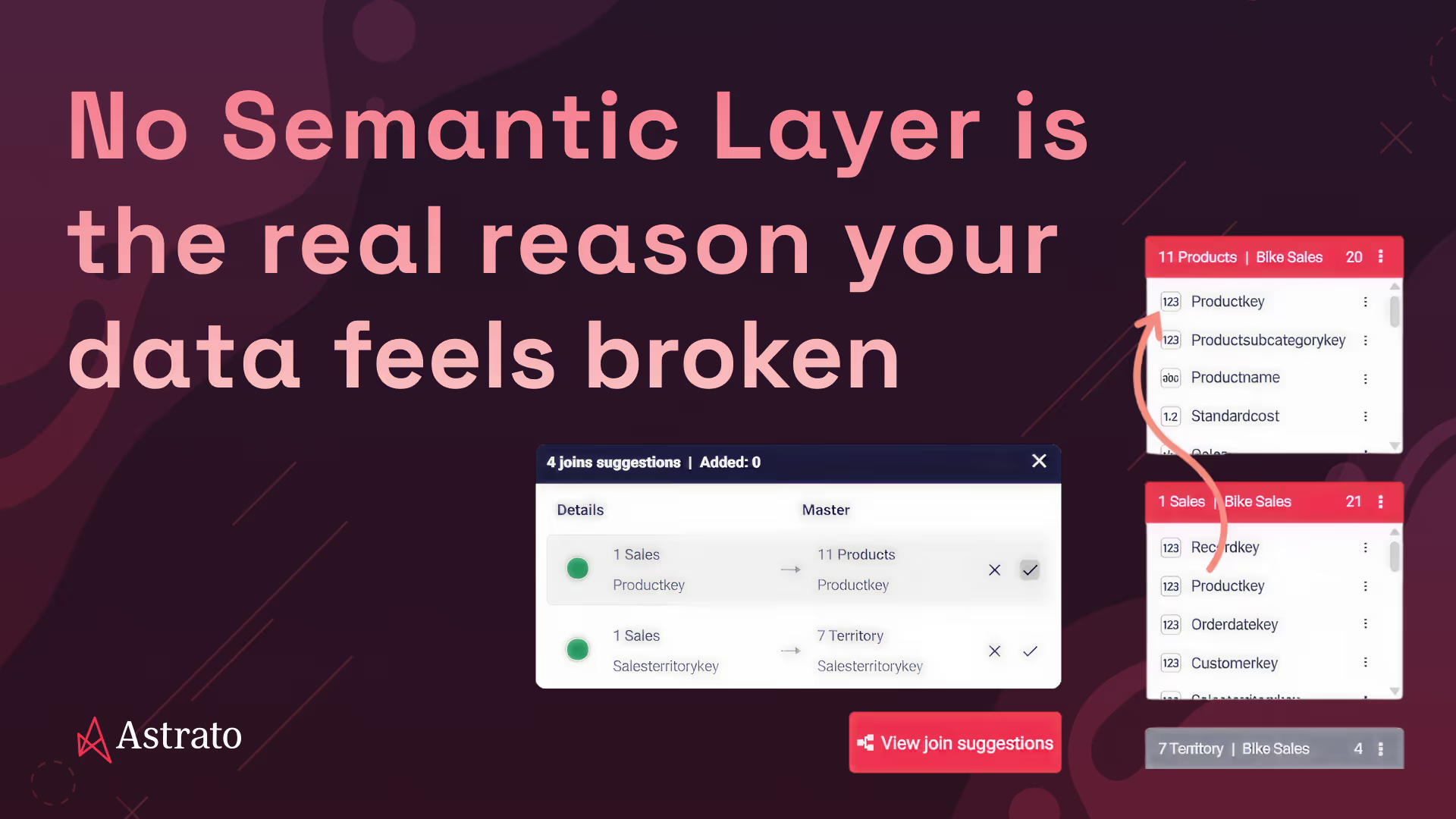
You’ve got data. Dashboards. Reports. Maybe even a data warehouse with more tables than a furniture store. But here’s the catch: every team still speaks a different data dialect.
Marketing sees one version of "conversion rate." Finance sees another. IT has no clue which one’s right.
That’s where the semantic layer comes in.
It’s not just a layer. It’s the interpreter, the governor, the translator – the thing that turns your swamp of siloed logic into a common language your entire company can understand.
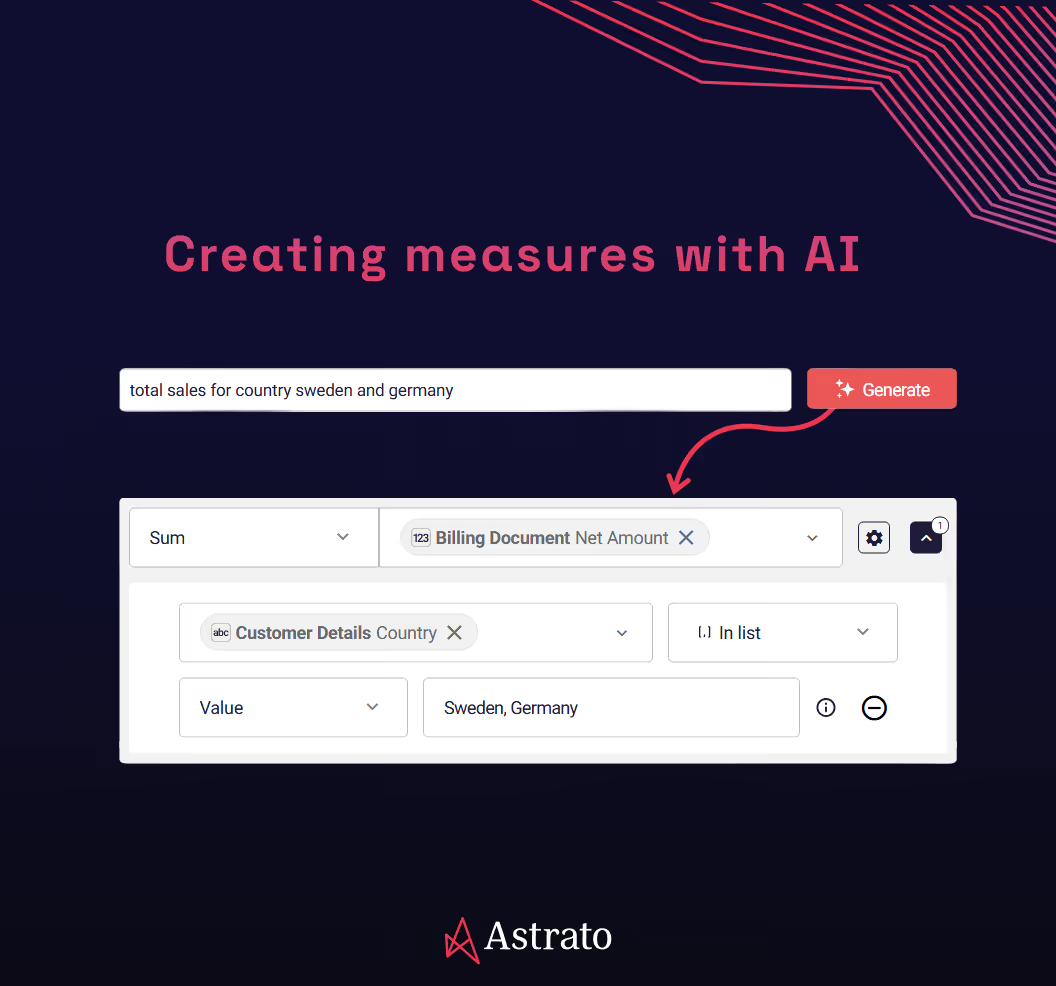
And it’s not just for dashboards anymore. If you want to be AI-ready, a semantic layer is non-negotiable. Agentic AI and natural language tools rely on a well-modeled, context-aware semantic layer to read and reason over your data. It’s how machines understand your business.
So, let’s unpack what it is, why it matters, what it’s made of, and how tools like Astrato bring it to life in the cloud.
⚡ TL;DR
- A semantic layer is the connective tissue between your raw data and the tools business users rely on – it makes your data human-readable, context-rich, and aligned.
- It ensures consistent data definitions across departments and reduces duplicated logic and miscommunication.
- It enables governed self-service analytics without sacrificing data quality, trust, or control.
- It simplifies data modeling across complex and distributed systems – from modern data stacks to legacy sources.
- Tools like Astrato combine visual modeling, live-query access, and user-friendly UI to bring semantic layers to life – no heavy engineering required.
So... What Is a Semantic Layer?
A semantic layer is a business representation of data. It connects your raw data, structured across your data warehouse, data lakes, or other data sources, to the everyday language business users speak. It abstracts the complexity of your physical data structures, turning data elements into familiar business terms, accessible through analytics tools your teams already use.
It supports both localized semantic layers – customized for a department – and universal semantic layers that serve the entire organization. These types of semantic layers are key to establishing a single source of truth across departments.
Think of your data warehouse like a stocked kitchen. The semantic layer is the recipe card, turning all those raw ingredients into something usable.
You don’t need to be a chef to follow the recipe. You just need clear instructions.
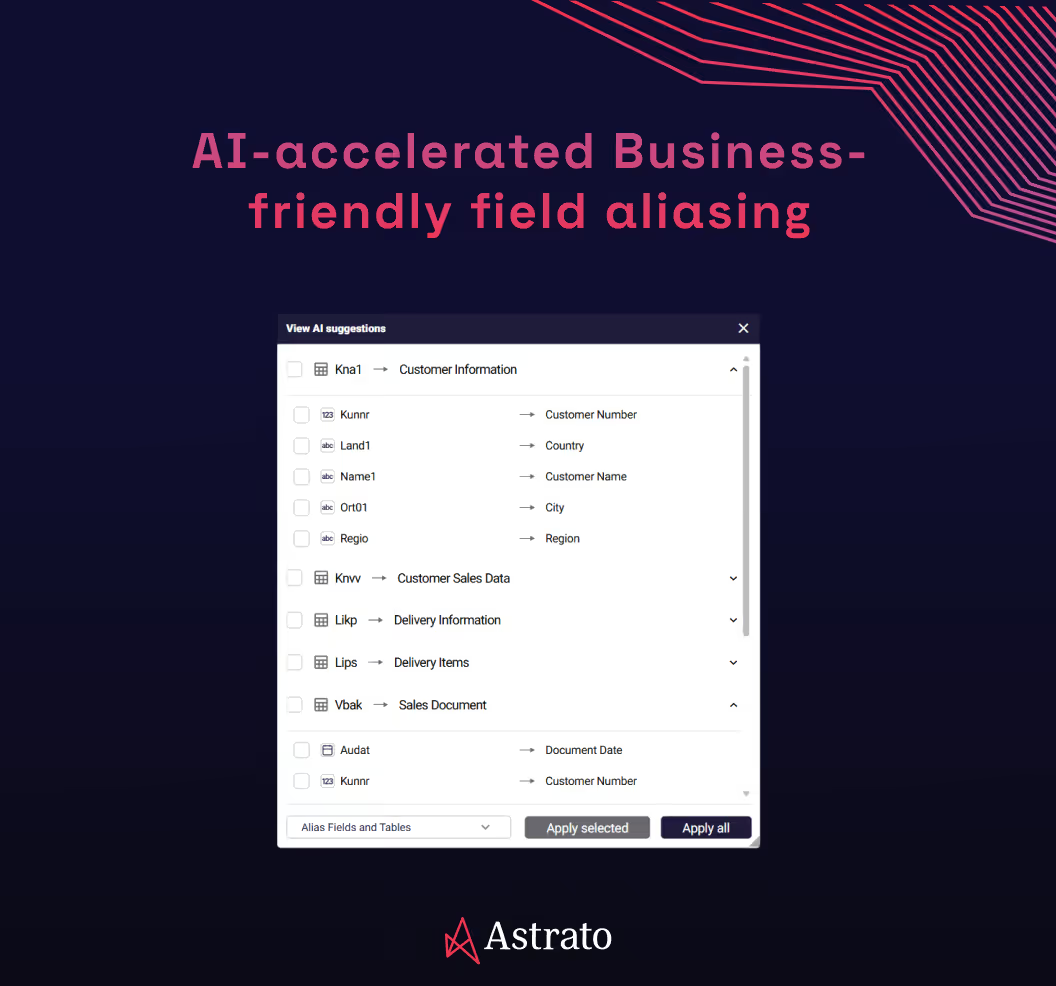
At its core, the semantic layer translates technical fields and schema spaghetti into friendly, business-aligned concepts. It’s what turns tbl_cust_id into "Customer ID" and helps you actually compare performance across marketing, sales, and ops.
🌮 Quick win: A marketing manager at a global brand needs ROI stats. Instead of pinging the data team, she opens Astrato, selects "Campaign ROI," and sees governed, real-time metrics. Done.
Whether it's localized (e.g. finance-only) or universal (cross-departmental), a semantic layer ensures consistency, transparency, and trust across the org.
🔁 Try this: Ask five teams to define "churn". If you get five different answers, you need a semantic layer yesterday.
.avif)
🧠 Anatomy of a Semantic Layer
1. Metadata Repository
This is your business glossary. It tells your tools (and your team) what the data means.
It includes:
- Field mappings between technical data and business names
- Data lineage so users can trace where metrics come from
- Entity relationships to clarify how tables relate
In Astrato, you can define reusable dimensions like "Region" or "Customer Type" once, then apply them everywhere. No more copy-pasting SQL logic into 17 reports.
2. Logical Data Model
This layer defines how data is connected across tables, schemas, or even sources. It abstracts away ugly joins and raw column names.
A well-constructed logical model enables:
- Drag-and-drop interfaces for business users
- Clean joins across disparate systems (e.g., CRM + ERP)
- A consistent foundation for KPIs
With Astrato’s human-readable models, teams can scale dashboards without hiring a small army of data engineers.
🧱 Anti-pattern alert: Letting every team define metrics in their own tool. Now you’ve got five definitions of "revenue." And five different truths.
3. Metrics
This is where things get real. Metrics are the formulas behind the dashboards – and when centralized, they eliminate chaos.
Benefits of metric governance:
- One version of each KPI (ARR, CAC, churn)
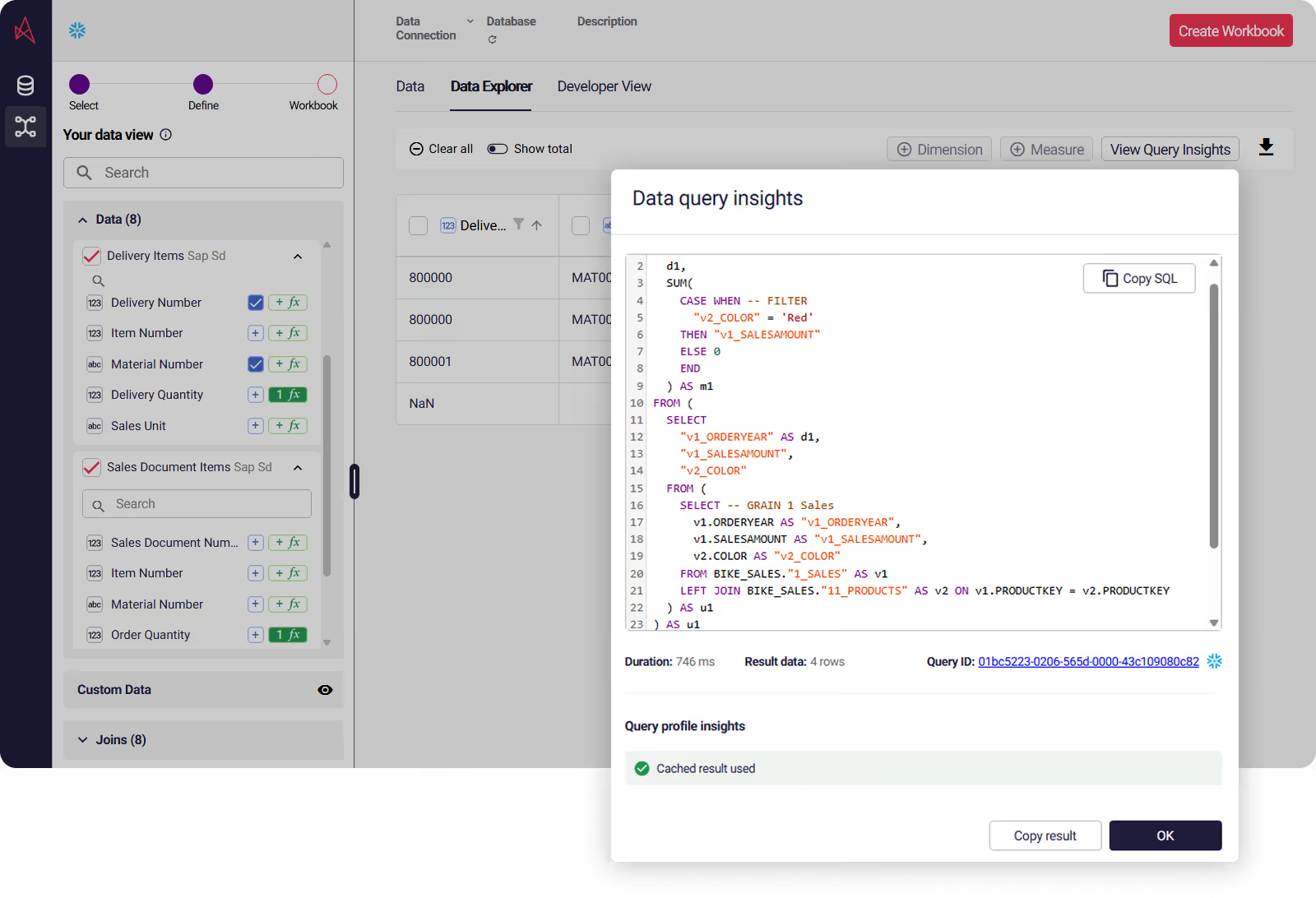
- Transparent logic – click in to inspect how it’s calculated
- Confidence that dashboards reflect reality
Astrato makes metrics transparent and consistent – no more mystery math or black-box dashboards.
Why bother? (aka the Big Wins)
✅ Better Access
Business users don’t want SQL. They want answers. The semantic layer delivers exactly that.
With Astrato’s semantic layer, users get:
- Plain English field names
- Governed filters and dropdowns
- Drag-and-drop UX without the fear of breaking logic
This bridges the gap between "tech" and "business" once and for all.
✅ Real Governance
Data democratization doesn't mean losing control. A semantic layer enables:
- Role-based access to metrics and fields
- Row-level security based on user identity
- Shared views that are consistent and curated
Astrato bakes in access rules and row-level security. Everyone sees what they should. No more leaks, no more compliance stress.
✅ Smarter Decisions
When everyone works from the same definitions, decisions get faster – and more accurate.
Executives no longer debate data definitions. They debate strategy.
👷♀️ Why It’s Hard (but worth it)
The promise of semantic layers is powerful, but successful semantic layer implementation requires solving for technical, organizational, and performance challenges.
Many organizations have fragmented data pipelines and scattered metric definitions that impact data quality and create silos. A robust semantic model can help unify this under a modern enterprise data architecture that supports data consistency, performance, and adoption.
Complexity
Building a semantic layer takes thought, planning, and alignment. It means:
- Cataloging your business definitions
- Auditing your existing metrics
- Mapping the mess to something clean
Performance
Query performance is non-negotiable for user adoption and data analysts. With ever-increasing data volumes, modern data stacks need flexible architecture that supports future data workloads, without compromising speed or reliability. Semantic layers that push queries to underlying data sources without requiring transformation reduce latency and boost accuracy.
Live queries and high concurrency demand fast architecture. Astrato’s zero-copy design pushes queries directly to Snowflake without extracts or delays.
Benefits:
- Dashboards load in seconds
- No stale data from weekly refreshes
- Real-time visibility without performance trade-offs
Adoption
Even the best architecture is useless without adoption. Semantic layers help because:
- Users can build their own reports without writing SQL
- Metric definitions are visible and inspectable
- No training required to start analyzing
🧭 Rule of thumb: If users can answer their own questions, they'll actually use the tool.
🧪 Example Use Cases
Let’s get practical. Here are a few ways a semantic layer can show up in the wild:
- Retail analytics: A merchandising team tracks product margin, stock status, and promotional impact using a single model that applies across campaigns, markets, and dashboards. With the semantic layer in place, they can plan promotions and analyze revenue without rebuilding logic or copy-pasting filters.
- Subscription businesses: Finance and growth teams rely on consistent KPIs – churn, LTV, CAC – defined once in the semantic layer. Whether it’s board decks or performance dashboards, everyone’s pulling from the same truth. Metrics are calculated live and can be inspected at any time to verify the formula behind the number.
- Healthcare operations: BI teams model complex clinical data – lab results, appointment timelines, treatment plans – so medical professionals get exactly what they need, without touching raw tables. The semantic layer enables clinicians to interact with governed dashboards while analysts maintain control behind the scenes.
These use cases show how semantic layers reduce overhead, accelerate insight, and give non-technical teams the power to act on data with confidence.
🛠️ Building the Right Way
A semantic layer platform isn’t just about modeling – it’s about delivering self-service analytics, aligning business intelligence tools, and managing data access effectively. Whether you’re working with BI tools or considering data virtualization platforms, your semantic model should reinforce enterprise governance while providing a seamless experience to analyze data independently.
1. Make It Intuitive
Labels matter. Clear naming conventions matter. Astrato’s UI helps, but you still need to think about the end user.
Add definitions. Validate field names. Get feedback. Test with real humans.
2. Plan for Scale
Your data's going to grow. Your semantic layer should too.
Design for:
- Schema evolution
- New source integrations
- Higher data volumes and concurrency
Astrato scales natively with Snowflake and doesn’t need rebuilding when your schema shifts.
3. Keep It Consistent
Metric drift = organizational confusion.
With Astrato, once you define a metric, it becomes reusable across all dashboards. That means fewer debates and faster alignment.
🧰 How to Get Started with a Semantic Layer
Want to build a semantic layer but don’t know where to begin? Here’s a quick-start roadmap:
- Audit your current dashboards. Look for duplicate metrics, inconsistent KPIs, or areas where business teams are relying on shadow spreadsheets.
- Define your business glossary. Pick 10–15 terms that matter (ARR, churn, active user) and align with stakeholders on definitions.
- Choose your tool. Pick a platform that supports governed metrics, drag-and-drop UX, and native cloud performance. Astrato checks all these boxes.
- Start small. Pilot with a single team – like finance or marketing – and prove the value with one or two high-impact dashboards.
- Document and train. Make metric definitions visible. Host a “What’s in the metric” lunch-and-learn. Encourage questions.
- Iterate and scale. As adoption grows, expand your model to other teams and new data sources. Monitor usage and feedback to refine continuously.
🧪 Start with what hurts most: that metric nobody agrees on. If you can fix that, you’re already winning.
🔮 What’s Next
Agentic AI + Semantic Layers
AI in BI is trending, but without a semantic model, it's basically guessing.
A well-governed semantic layer gives AI the context it needs:
- Clear metric definitions (so "active users" isn't misinterpreted)
- Descriptive metadata (so tables and fields are human-readable)
- Consistent models (so prompts like “What’s our best-performing product?” return the right answer)
With Astrato, semantic clarity boosts AI performance, whether you're using natural language queries or generating insights automatically. It’s the foundation for trustworthy, explainable AI in analytics.
Cloud-Native FTW
A cloud-native semantic layer integrates directly with your existing data infrastructure across data lakes, data warehouses, and external apps, without relying on batch data transformation or fragile ETL. This flexibility supports data from multiple sources, improves scalability, and fits cleanly into your broader enterprise data architecture.
Legacy BI wasn’t built for cloud scale. Astrato is.
- Built on top of Snowflake
- No local extracts
- Fully elastic and cost-aware
Real-Time or Bust
Static dashboards are dying. Semantic layers enable:
- Event-driven insights
- Real-time KPIs
- Continuous visibility
Astrato supports live metrics and up-to-the-second reporting. Because waiting is out.
🧩 Quick Diagnostic: Do You Need This?
If you answer YES to 3 or more, stop reading and start building:
- Do teams define the same metric differently?
- Do analysts rebuild the same report logic repeatedly?
- Are people unsure which dashboard is "correct"?
- Is IT a bottleneck for insights?
- Do you trust your data less than you trust your gut?
Final Word
The semantic layer isn’t a nice-to-have. It’s the missing piece in modern analytics.
It reduces noise, drives clarity, and lets people focus on decisions—not definitions.
Astrato makes it happen with no-code modeling, governed metrics, and live queries.
No more silos. No more dashboard drama. Just data everyone can trust.
Let’s call that progress.
Frequently Asked Questions
What is a semantic layer?
A semantic layer serves as a business representation of data, enabling users to engage with information through familiar terms, simplifying access while ensuring consistency across analytics tools. This enhances user understanding and promotes effective data usage.
What are the key components of a semantic layer?
The key components of a semantic layer are the metadata repository, logical data model, and metrics, each essential for organizing and abstracting data to enhance accessibility and analysis. Adopting these components ensures a more efficient and intuitive data environment.
How does a semantic layer enhance data accessibility?
A semantic layer enhances data accessibility by translating complex technical data into familiar business terminology, enabling users to analyze information without needing to understand intricate data structures. This simplification empowers more individuals to engage with data effectively.
What are the challenges in implementing a semantic layer?
Implementing a semantic layer presents challenges such as technical complexity, performance optimization, and user adoption. Addressing these issues necessitates meticulous planning, collaboration, and continuous maintenance for successful implementation.
What are some real-world use cases of semantic layers?
Semantic layers are effectively utilized in e-commerce for campaign planning and customer insights, in financial services for risk assessment and compliance reporting, and in healthcare to enhance patient care through integrated data sources. These applications demonstrate the versatility and importance of semantic layers across various industries.
Ready to experience next-gen analytics?
See how Astrato runs natively in your warehouse.